
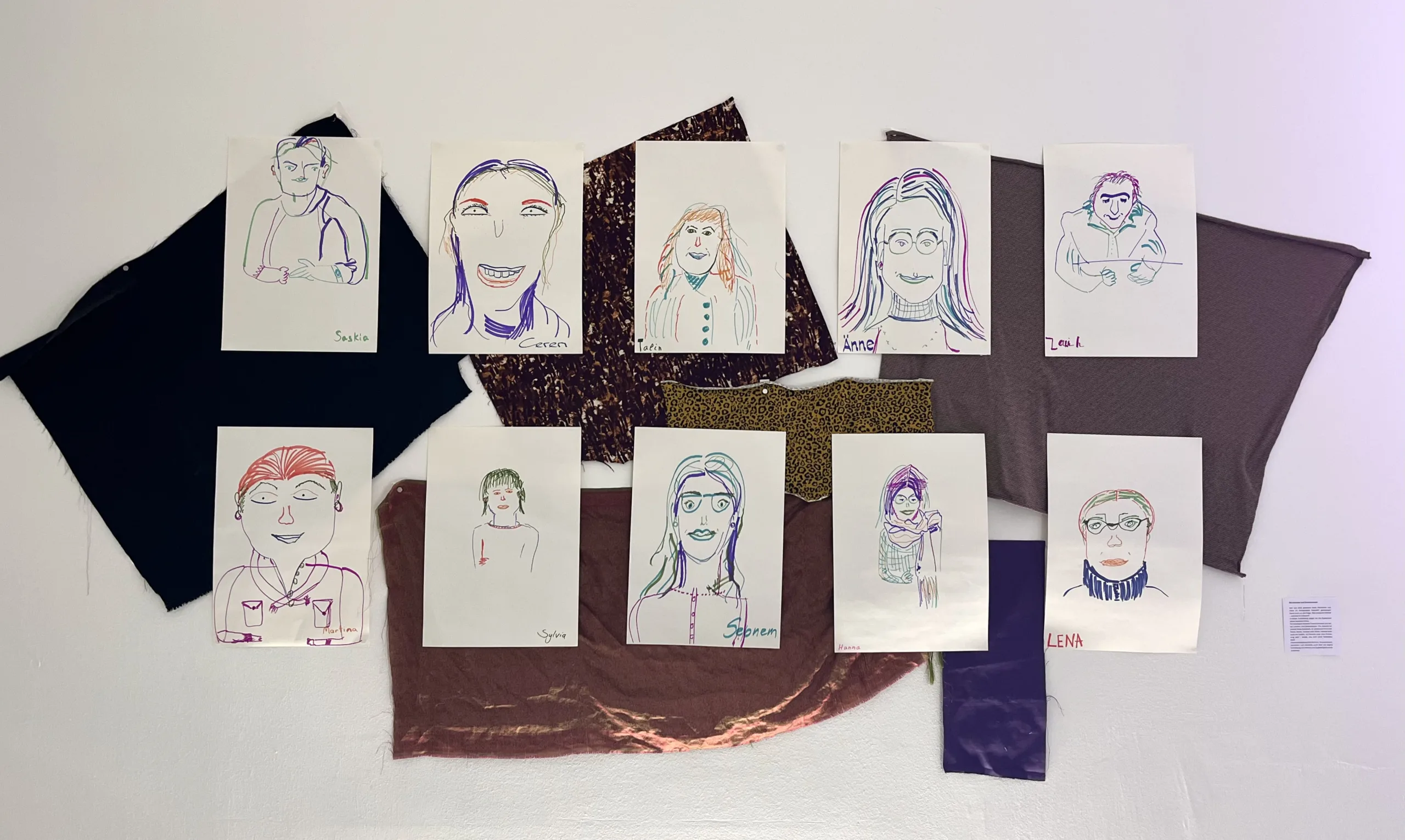
What do terms like Heimat (home/homeland) and belonging mean to people in a district undergoing radical change? Twelve artists from our “HeimArt” art project spent several months searching for answers.
The results were recently presented to the public for the first time during the exhibition “Pieces of Home – A Mosaic of Belonging,” held from March 25 to 28 at the Neustadt-Centrum. The artists shared personal perspectives and diverse impressions that deliberately remain open-ended, leaving room for the viewers’ own thoughts and interpretations. Participants utilized a wide range of artistic mediums, including stop-motion films, collages, sculptures, installations, and prints. Many of the artists were also present at the opening on March 25 to share insights into their works and stories.
What is Home?
For the participants of this international and intergenerational art course, Heimat is not always tied to a specific location. It can be evoked by a feeling, a person, or a memory.
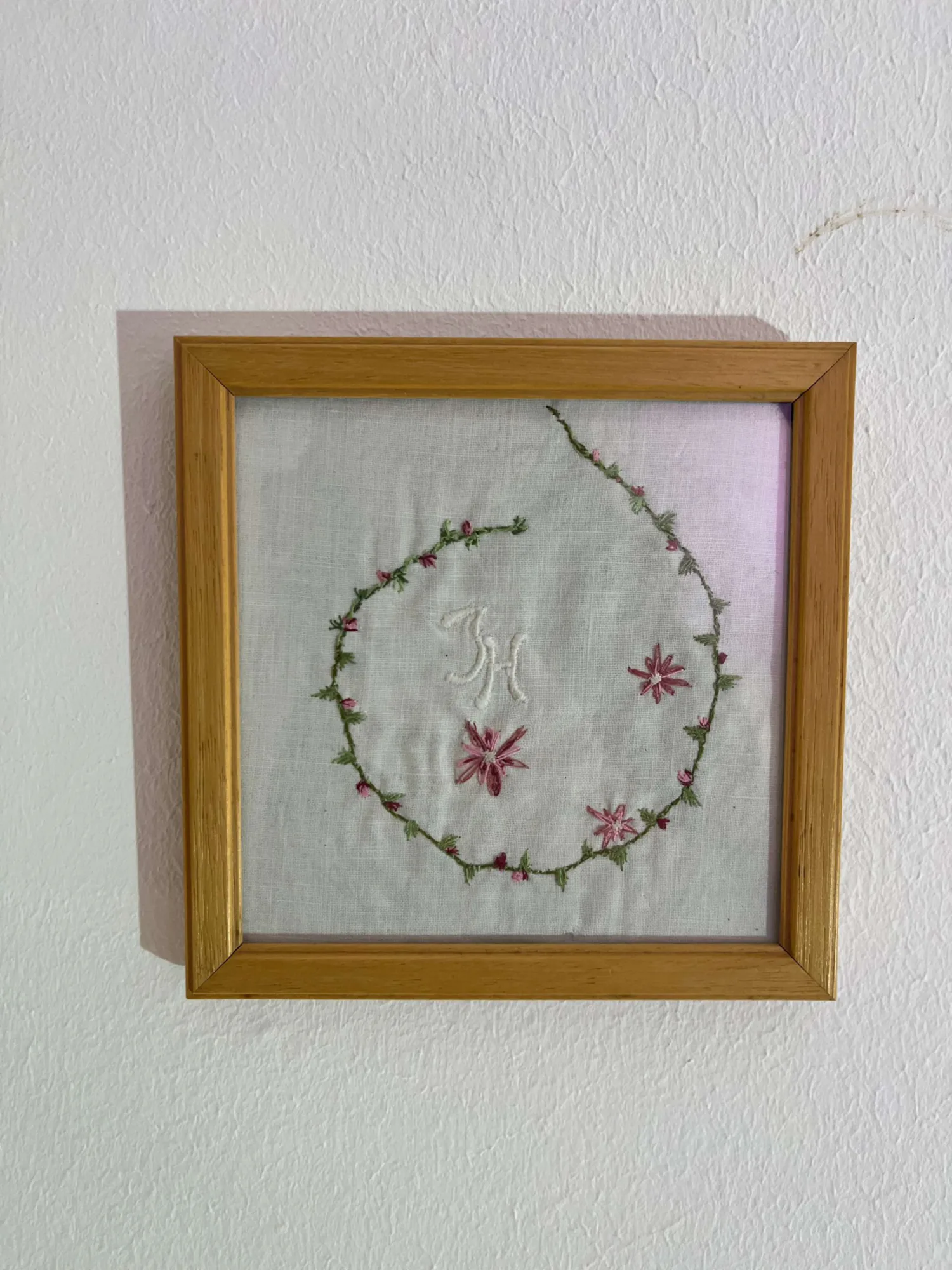
Artist: Martina Schmitt
Material: Cotton, embroidery
Dimensions: 30 × 30 cm
Martina, for instance, recognizes home in the century-old cotton fabric of bed linens that her mother once received as a dowry. Martina delicately decorated her mother’s initials with colorful floral vines made of embroidery thread.
Saskia uses household waste as the raw material for her art. Remnants of various intoxicants—such as coffee filters, bottle caps, or empty medication packaging—were carefully arranged, collaged, and exposed using a light-sensitive solution, a technique known as cyanotype. The artist suggests that people seek and find a temporary sense of home within intoxicating substances.
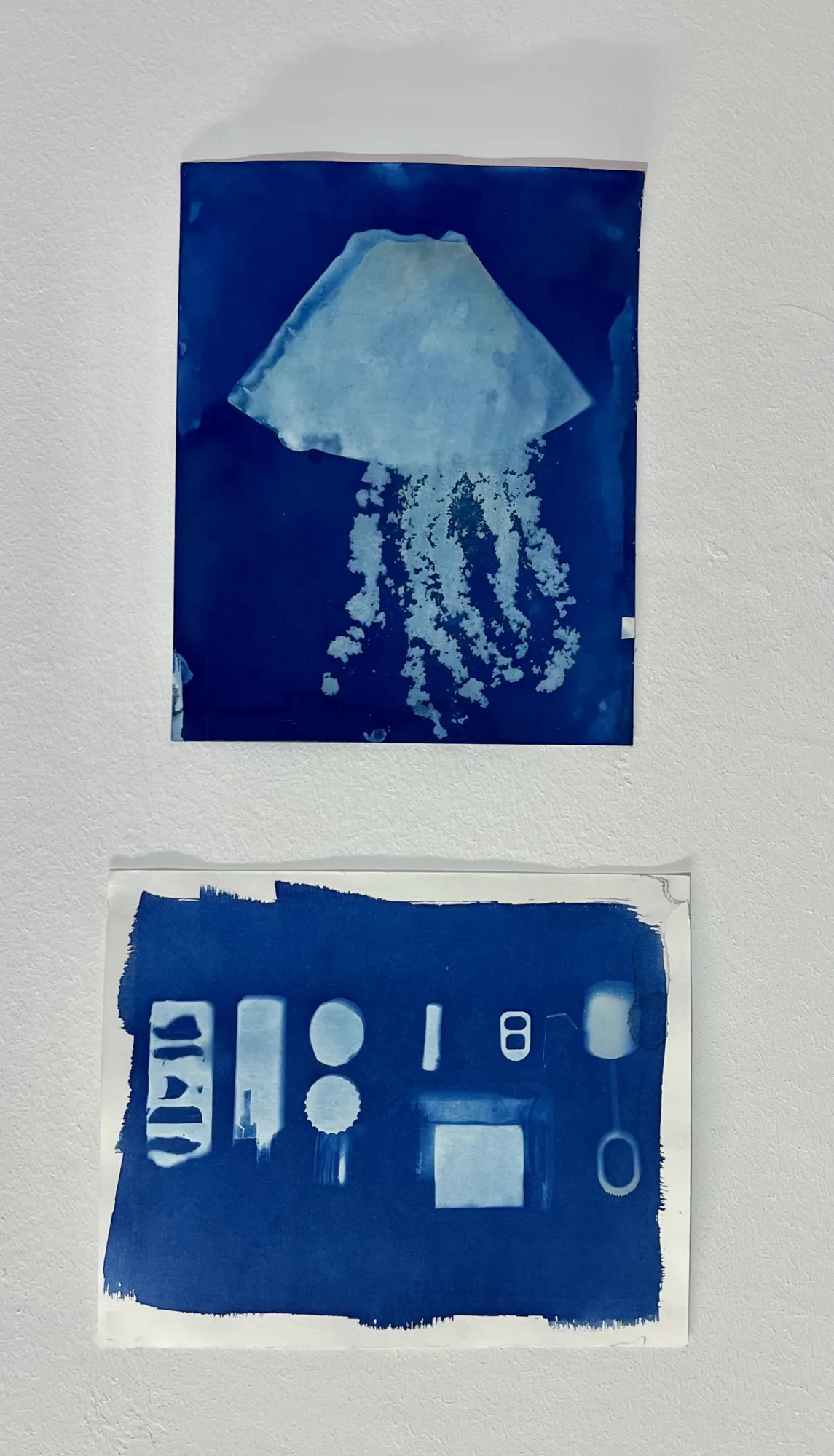
Artist: Saskia
Technique: Cyanotype
Dimensions: 24 × 29.5 cm
360-Degree Perspective: Digital Access for the Future
Around 120 people visited the exhibition, taking the opportunity to reflect on home, belonging, and personal memories. A particular highlight was our interactive corner, where visitors could create their own small clay sculptures based on the theme “A Feeling of Home.” These became part of the exhibition, creatively complementing the existing clay works.
To ensure that the exhibition and the debate surrounding belonging do not end when the physical show is dismantled, we are exploring new methods of documentation. Using 360-degree photography and 3D modeling, we have digitized the show and are presenting it here on our website. In this way, our “Mosaic of Belonging” will remain preserved in the collective memory of the district for a long time to come. (äh/jh)