
The urban heritage of the Neustadt is unknown to many. An initiative of various residents wants to change that: why a digital history book for Halle-Neustadt is needed.
In the footsteps of the Bauhaus
As the largest urban development new foundation of the GDR, Halle-Neustadt, under the direction of the chief architect Richard Paulick from the Bauhaus, built a completely new and modern city in a very short time for the growing need for workers in the nearby chemical industry.
A holistic city of short distances was built. Each of the various residential complexes had its own supply center, various catering facilities, kindergartens and schools. The numerous trees and shrubs that have been planted today combine to create a valuable green carpet and ensure a pleasant urban climate. In its shade you will find excellent experimental buildings in East Modernism, such as the Delta kindergartens, which are now under monument protection, with their innovative roof constructions made of HP shells.
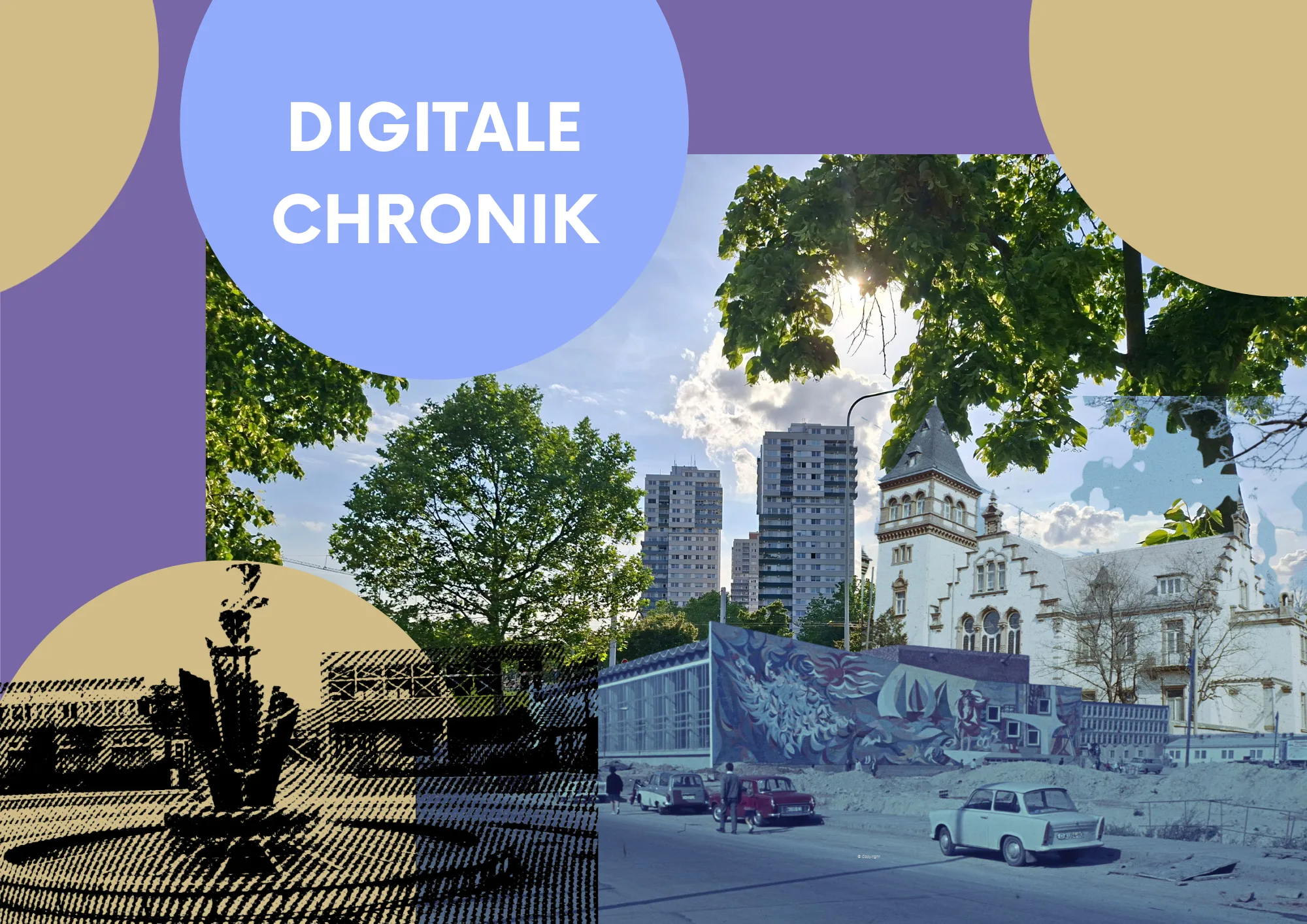
Since it was founded in 1964, Halle-Neustadt has been offering future generations a unique and largely preserved urban development testimony to the zeitgeist of the East German post-war modernity of the time. As a reflection of an ideal and modern society, an architectural total work of art from socialist urban planning and art in public space was to be created. With over 150 works of art in public space, the district was and is one of the largest open-air galleries in Germany.
Neustadt in upheaval: The chemical workers’ city is reinventing itself
By the end of 1990, more than 90,000 people lived in Halle-Neustadt, the political turnaround and the collapse of the GDR followed emigration, aging, dismantling and social segregation. These rapid socio-political upheavals characterize the previous 60-year history of the city particularly strongly and are reflected in all areas of the life district. With the construction of the Neustadt-Centrum and the tram route at the turn of the millennium, new urban development impulses have already been set, the construction of the modern residential campus with its pyramid houses on a former fallow area on Begoniastrasse is continuing this important positive urban development.
“Anyone who wants to read in the future has to leaf through the past.” – André Malraux
In order to survive as a functioning social organism, the former socialist model city must constantly deal with and reinvent this difficult change with this difficult change. Especially in the heart of the district, this is clearly visible in the further development of the five high-rise windows.
As part of the smart city initiative of the city of Halle (Saale), we want to take the opportunity to collect our still young district history for future generations in a central digital district chronicle.
We would like to digitally accompany this path with historical pictures and archive material as well as personal experiences of the residents and hope for future generations to continue this heritage for the further urban development and future of the Neustadt.
We would like to thank the team at Unser Haneu, the Bauverein with its long-standing history workshop and the valuable collection about the Neustadt and the management of the Halle City Archives.
Interested parties who would like to support us in our work please contact us by e-mail: olaf.gorgas@web.de