
Directly to the chapter: Stronger sense of community in the past
Directly to the chapter: East identity of the after-turn children
Directly to the chapter: Creative writing despite ADHD
Directly to the chapter: Aron’s view of the state elections in Saxony-Anhalt
Stronger Sense of community in the past
Our HANEU: You’ll be the town clerk of Halle until the end of September. In your research, you go in search of community. Was there more community before?
Aron Boks: What made me think is that I read the sentence”There used to be more community” heard very often. I’ve generally been looking for community in society. I’m also interested in the need for how people create encounters and how community can be understood at all. I notice that the need for exchange is quite strong. But I think the form of how to understand community changes over time.
Our Haneu: What changes are you observing or what changes are your interlocutors telling you?
Aron Boks: I notice that at least the perceived polarization is getting bigger. Many of my interlocutors have the feeling that the company around them is totally irreconcilable in many respects. If you ask more carefully, you often see that you don’t experience such a strong division at all in your own environment. That’s why I have more positive examples. People invite me and show me how to create encounters or get meeting points in their environment. They want to develop and maintain a certain regularity for people. It’s not about getting back something lost, it’s about adapting to new needs.
The best example that mixes both was a meeting place for older women to whom I was invited. These are over 50 singles who get to know each other via a dating platform and then also meet privately to do something. This combines both: social networks in digital and personal encounters. Therefore, I believe that it is a common search for how community can arise under the respective circumstances.
Our Haneu: When you speak to the “first-time generation” generation in Neustadt, you sometimes get the impression that you miss the community from the past.
Aron Boks:Of course, I can imagine that first-time recipients from Neustadt say: There used to be more community. I think there’s a lot going on. So that times get more complicated, that there is a stronger alienation with a rampant capitalism. You can’t talk that away. But I think that older people in particular are missing something with a look at the GDR that may not have existed in this form. but that they simply miss a piece of youth or a more carefree time, which, if you then asked more closely, might have been a bit complained about in the dictatorship.
Nevertheless, there were also beautiful moments, everyday life and cohesion – especially in crisis situations. You have this caring, but strict system above you, almost like parents, and you are allying yourself with the others, even if you were not a great opposition person. I notice that when people mist about how they turned against the state, even with little things. It often sounds as if they had played tricks on the teacher. That also connects. This is part of a cohesion that was gone when you were in democracy, in freedom, which is also challenging.
Our haneu: Why was it important to you to become a town clerk? Did it also play a role that your great-great-uncle, the artist and SED official Willi Sitte, was closely connected to Halle?
Aron Boks: Yes, I think so. And because I grew up in Saxony-Anhalt, I found it exciting this election year. I’ve gotten to know Halle through research in recent years. And I thought it was great that there was a certain connection from Willi Sitte. So I thought I’d try it. And now I really like it. I really like Halle.
East identity in post-Wende children
Our haneu: Your novel “Naked to the GDR” …
Aron Boks: It’s less a novel, more of a non-fiction, a search for clues.
… bears the subtitle: ‘My great-great-uncle Willi Sitte and what the whole story has to do with me.’ Have you found an answer to that in the meantime?
Aron Boks: I think this search for clues for Willi Sitte was more of a start for me to connect with the history of the GDR and thus also to find access to my family history. That opened up a really big room. I don’t think there is an easy answer, but that it’s more about creating an access and saying: Okay, the whole thing has anything to do with me at all. You can’t say exactly what that is, except that this time, life and everyday life in the GDR shaped my family and which also raised me. That left its mark, not just negative. It’s just a completely different growing up in general than with people who grew up in the West. Realizing this at all was a start for me. Before that, I didn’t even know that it had any meaning or that it was interesting to pursue it.
Our haneu: And now the topic won’t let you go.
Aron Boks: No, I think there is no other way. I find it very exciting to find out more about the story and talk about this topic because I notice that it is not an everyday topic. But I think there is still a lot of need to speak. I always find it exciting to approach topics about it: How was life in the GDR or in divided Germany and what effects does that have to this day? How do you look at various debates from an East-West point of view? This topic has opened up a whole new world for me.
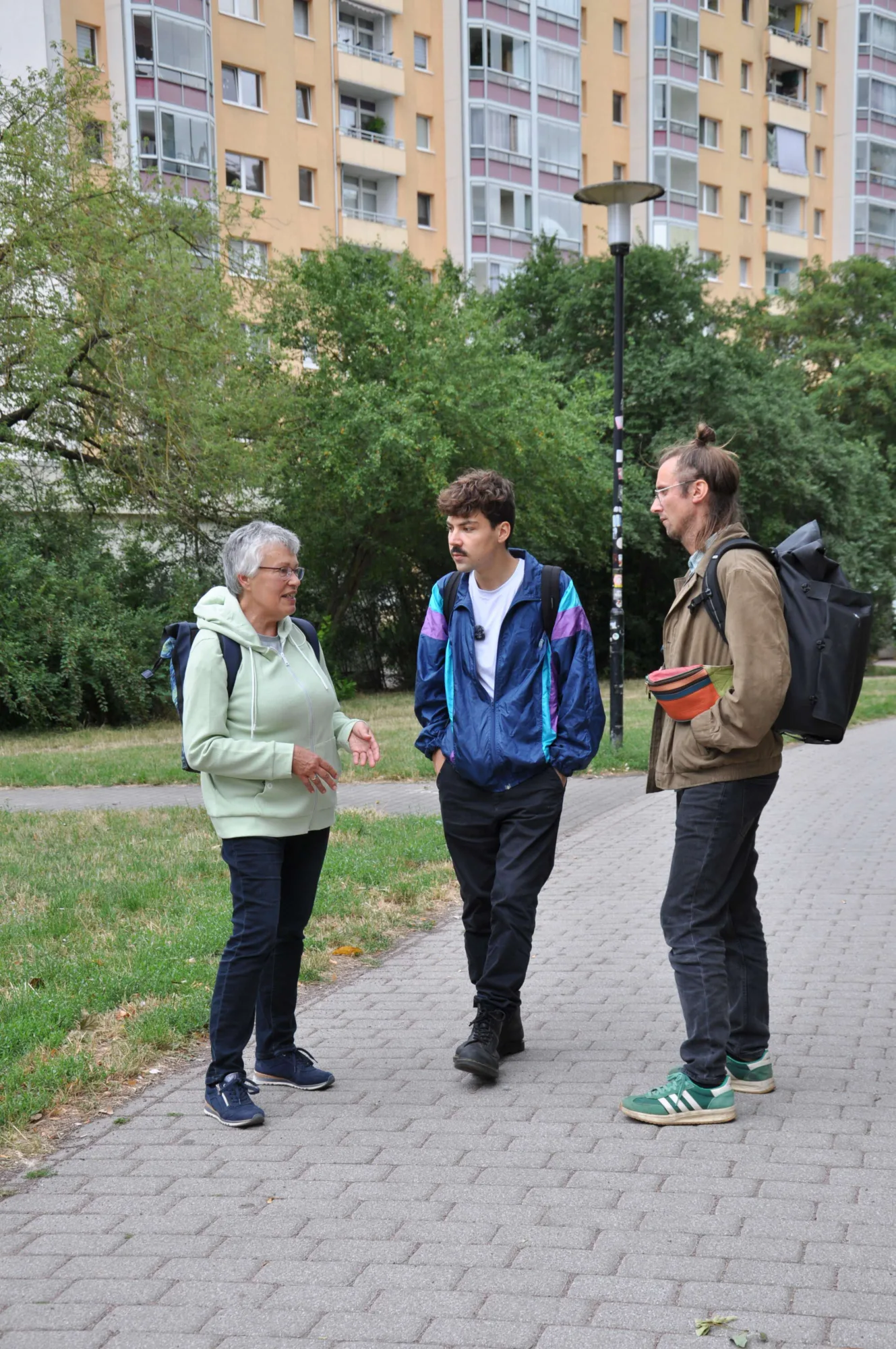
Our haneu: Could you say that this occupation with East identity and GDR history is primarily an attempt to find out something about yourself?
Aron Boks: Not primarily. I wouldn’t hierarchize that at all. Of course, it makes the whole thing more urgent for me because it’s part of my story. But it also gives me the opportunity to find out something about my environment and in general about the world that surrounds me. And that includes me. And because I like to take it personally, I naturally want to find out something about myself.
Our haneu: This first person is also present in your article, but also in your books. Is this also an approach to writing for you? Is that a tip you would give us as a Kiez editorial team?
Aron Boks: I think it’s fun. And if the shape is the most fun to start from the I, then it’s good. For some it’s totally worth it. And that’s how it was for me in the case of the GDR. If I hadn’t done it personally, I would have been very distant and I wouldn’t know if it would have been so easy for me to find my own access or whether I would have just tried to further reconstruct, which I could already read about the GDR anyway. And at the same time, when someone from your editorial office says: I have a topic here and I’m considering whether I should choose the first person, then you should just do it and then you can always see whether it fits right now, because there aren’t really any clear rules.
Our haneu: Your mother and grandmother often have their say in your books. Did you discuss with your family what you can publish?
Aron Boks: a little bit. In the meantime, I’m doing more, especially with my parents, when I realized that I was publishing a lot more. With my grandma, for example, it was the case with “Nakt in the GDR” that I sent her the passages from the text. She said I can just publish it. At one point, I wasn’t quite sure if I quoted her correctly, how she talked about her sister. At least I thought it was worth asking again because my grandmother described her sister as a stubborn socialist. But she said: I can do it. Her sister is still alive. The two have a pretty tense relationship, but that was okay for my grandma.
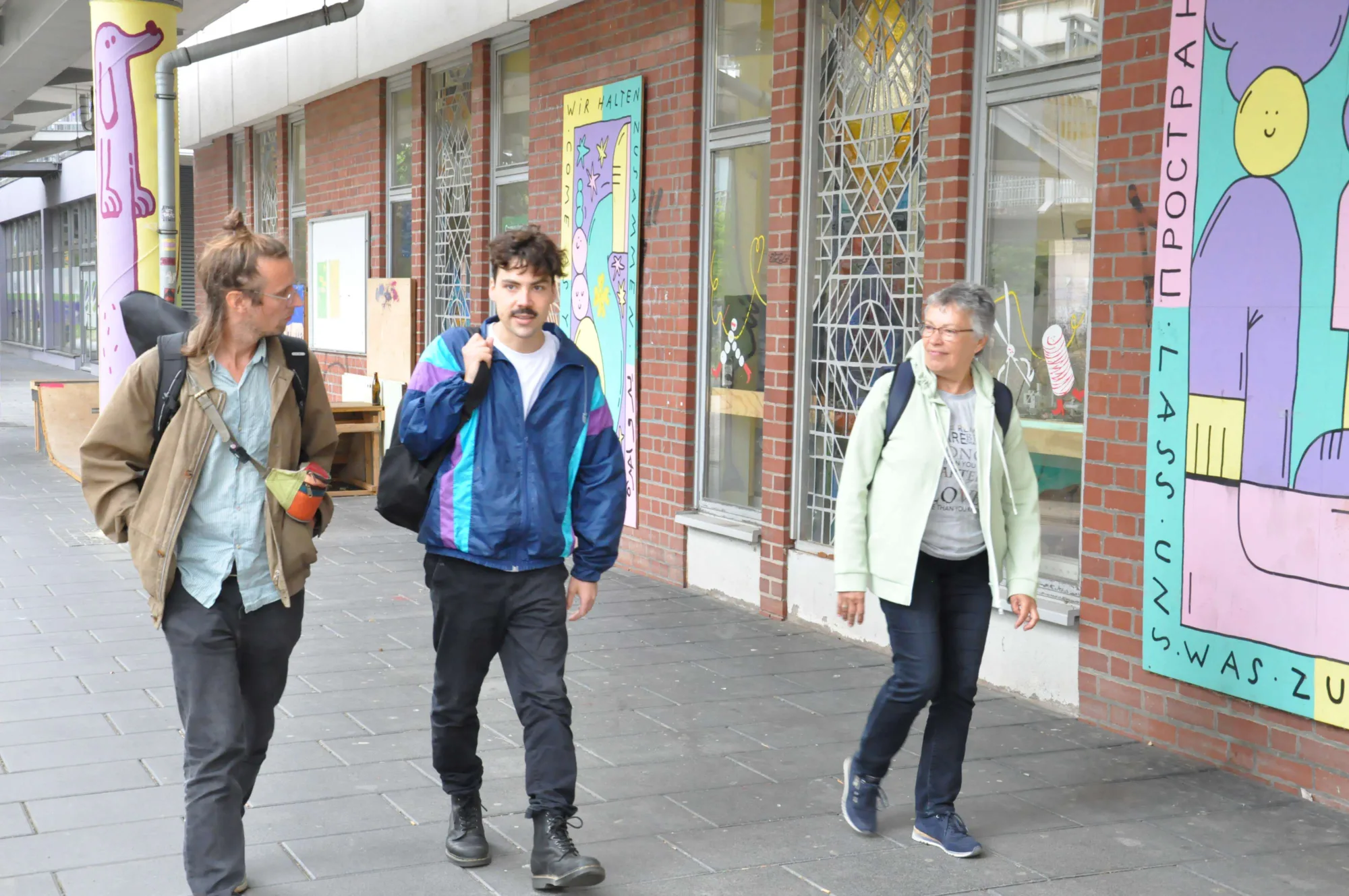
Our haneu: In “Nakt in the GDR” there is a scene in which you are sitting at the kitchen table with your mother and you ask her what the GDR has to do with her. She reacted evasively. Has your own view of your publication changed?
Aron Boks: Very strong, very strong. My mother was very meticulously careful beforehand to push this topic away from herself. But that had opened quite a bit between us. In the second book, “Ströntrozeit”, my mother even entrusted me with her diaries, which she wrote in the time of the turning point. And now she’s talking to me a lot more about the topic. In the meantime, we are increasingly finding a common language. I think there’s a big difference to my father. He spoke much more openly and directly about the GDR than my mother.
My mother was Willi Sitte’s great-niece. She had parents who used to be very convinced socialists. At the same time, however, she grew up very privileged, with Westgeld and Intershop. Her father went golfing. At the same time, however, they are also offended – with the school system, for example. And I think there were a lot of family crises that I don’t know that much about yet. My mother told me a lot about it, but my grandmother denies it again. It’s complicated and I think a lot plays a role when you’re ‘only talking about the GDR’. Even though I’m sometimes very frustrated with my parents and a lot of things annoy me, I actually think it’s pretty strong that they let them in and talk to me about it. There are often comparisons that the East needs a new ’68. I find these comparisons a bit unspeakable. I understand where it comes from, but it’s not the same.
Our haneu: The SED injustice was worked through much more privately than the Nazi past.
Aron Boks: Yes, but somehow not, because it’s not the case that you look for answers from the perpetrator generation and ask: What did you do during the GDR? You weren’t in the power position. Above all, they were busy finding a new life in a new society. But that also leads to the fact that you only see the generations of parents and the previous generations in a disadvantaged role, pity them and never really ask any serious questions. This whole society was based on a certain form of adaptation, as long as one did not go into the opposition completely. I spoke to Christa Wolf’s daughter about this. She is a psychoanalyst. She said that of course this leads to crass shame for many and also to gloss over things when you say: There used to be more cohesion, more company. You try to somehow make your life explainable.
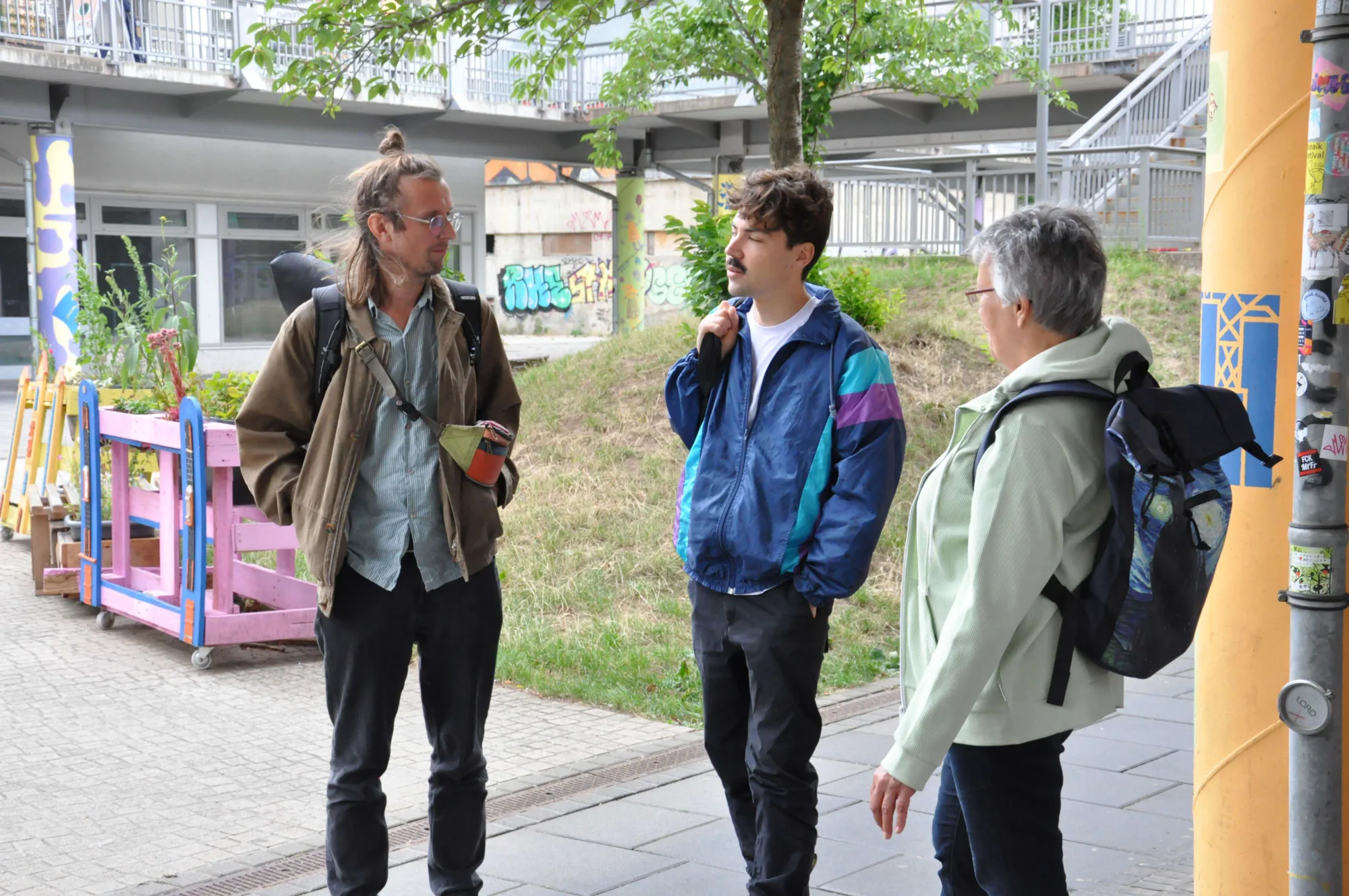
Creative creation despite and because of ADHD diagnosis
Our haneu: You’re constantly on the move, always on the move, one appointment at a time. How do you do that?
Aron Boks: I really like that, but the problem is: I can’t assess my limits very well. I love having a lot to do, but I don’t notice the point where it tilts. I only notice that at the moment when I’m getting stuck or irritated. For me, it is often the case that I overstimulate very quickly, become impulsive and perceive a lot of things hostilely when I’m so overwhelmed. And that’s no fun, because people don’t want any evil at all. I think a lot of people with ADHD know this: you don’t notice this point. There is a nice picture for this: Imagine a rain barrel into which water flows. You know that you have to dump them in time so that it doesn’t overflow. and for me it’s already full to the brim and then overturns.
Our haneu: What helps you so that the bin doesn’t overflow?
Aron Boks: By taking medication again after a very long time. I rejected this for a long time because I was afraid of losing my skills to lose my creativity. My life is built on the letter. For me it was very existential. I had exchanged ideas with a therapist. He explained to me that you can take the medication one day and leave it out the next day if you don’t like it or don’t like it. That changed me back then. I used to look for opportunities to take drugs or drink alcohol. This need has become less since I’ve been dealing with it more and pay more attention to my psyche. And it helps me that I have people I can confide in. My friend Marie in particular motivated me to deal more with the topic of ADHD.
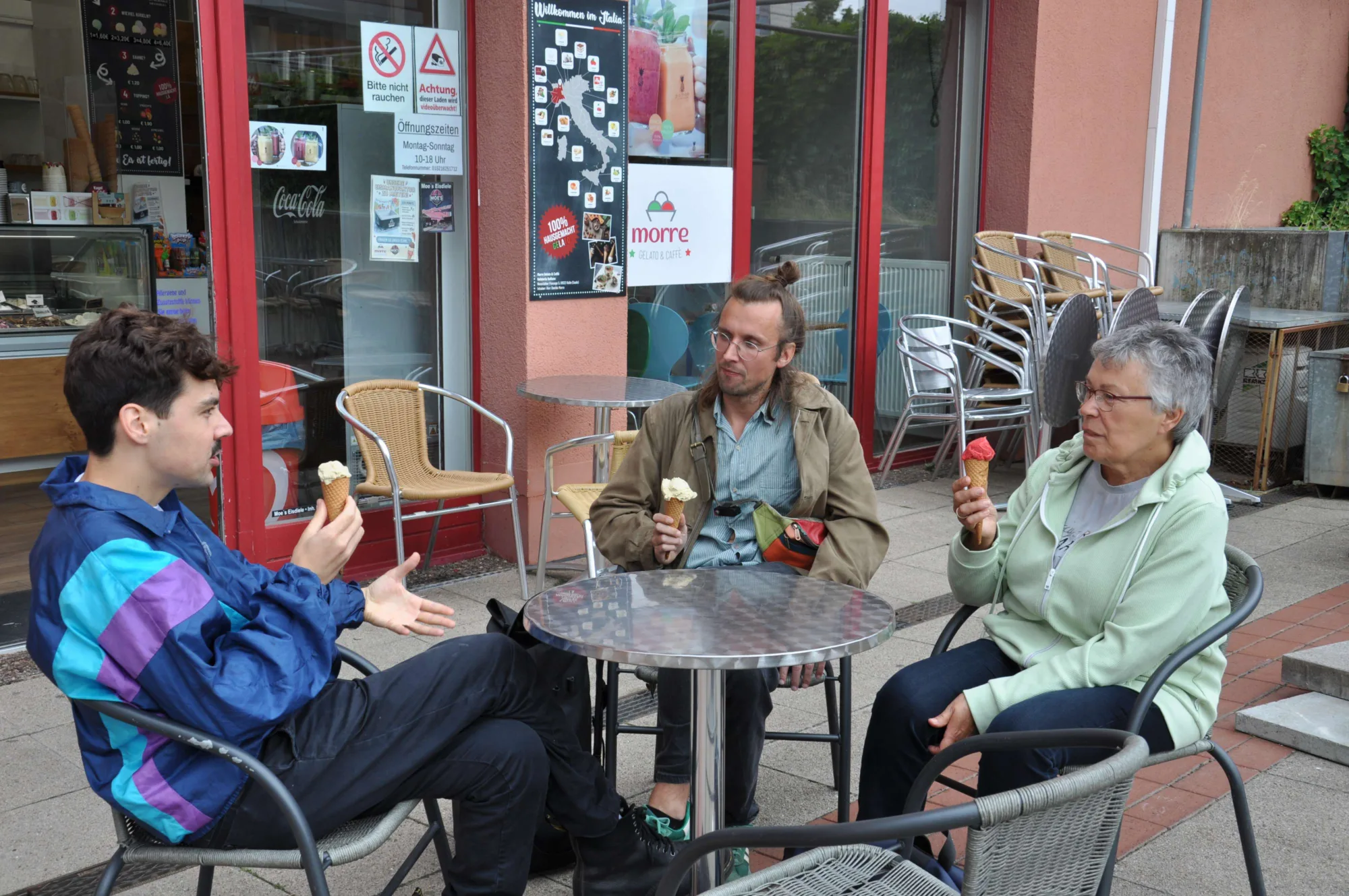
Our HANEU: Is there now more understanding for ADHD?
Aron Boks: I think I’m very happy in my environment. As a writer, you come across a greater understanding because you are moving in a creative bubble that has the topic much more on your screen without saying that ADHD is an artist’s disease. Consciousness is also high in social professions. I hope that someday this will become completely normal.
Aron’s view of the state elections in Saxony-Anhalt
Our haneu: You were born in Wernigerode, grew up in Blankenburg in the Harz Mountains, but now you live in Berlin. How do you feel when you look at your homeland of Saxony-Anhalt on the occasion of the state elections?
Aron Boks: I believe that there is already such a split, in the sense that people vote for the AfD or not. And I think that changes something when you ask yourself: What does this person stand for who decides that the AfD will come to power? He chooses a different life than what I want to lead. In any case. But how do I deal with it? How can a new togetherness look like? I’m just asking myself these questions. I’m neither good nor bad with that because I find it interesting in a perfidious way.